





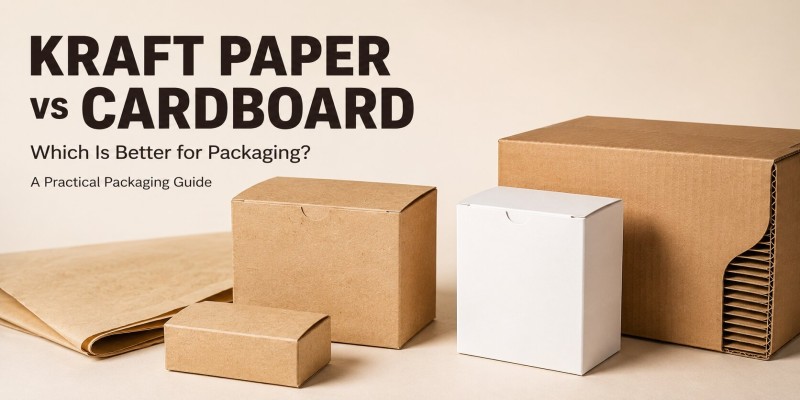
Choosing the right packaging material affects product protection, printing quality, shipping performance, cost and customer experience. A box should not only look attractive; it must also fit the product and withstand the conditions in which it will be stored, displayed or delivered.
In the kraft paper vs cardboard comparison, neither material is automatically better. Kraft paper packaging is popular for its natural appearance, while cardboard provides greater flexibility for detailed printing, protective structures and premium finishes.
The right choice depends on the product’s size, weight, fragility and intended use. This guide explains the main differences between kraft paper, kraft paperboard, paperboard and corrugated cardboard to help you choose suitable packaging for your business.
Kraft Paper vs Cardboard: Quick Comparison
Kraft paper and cardboard are both paper-based materials, but they are available in different structures and thicknesses.
- Kraft paper is commonly used for wrapping, bags, labels and protective sheets.
- Kraft paperboard is thicker and can be folded into cartons, sleeves and product boxes.
- Paperboard is often used for lightweight printed retail cartons.
- Corrugated cardboard contains a fluted layer that provides additional strength and cushioning.
- Kraft packaging suits natural, handmade and minimalist brands.
- Cardboard packaging supports detailed graphics, brighter colours and protective box designs.
The best option is the material that fits the product, supports the brand and provides the required level of protection.
What Is Kraft Paper?
Kraft paper is known for its natural brown colour and useful resistance to tearing. It is available in different weights, ranging from thin wrapping sheets to thicker packaging materials.
Lightweight kraft paper may be used for wrapping products, making shopping bags or filling space inside parcels. Thicker grades can be converted into sleeves, trays and folding cartons.
The term “kraft” does not describe one fixed structure. Thin kraft wrapping paper and a rigid kraft carton may have a similar appearance, but they provide different levels of protection.
Kraft paper packaging is commonly used for:
- Handmade products
- Natural skincare
- Candles and soap
- Jewellery and accessories
- Bakery products
- Gifts
- Subscription products
Its brown surface can create a warm, authentic presentation. However, the material must still be suitable for the product’s weight and dimensions.
What Is Kraft Board?
People searching what is kraft board are usually looking for a thicker material than ordinary kraft paper.
Kraft board, also called kraft paperboard, can be printed, cut, creased and folded into cartons and product boxes. Its performance depends on:
- Board thickness
- Box dimensions
- Product weight
- Packaging structure
- Inserts or dividers
- Storage and delivery conditions
A lightweight kraft carton may be suitable for soap, jewellery or accessories. A heavy candle jar or fragile product may require thicker board, a fitted insert or a corrugated outer box.
Terms such as kraft cardboard, cardboard kraft and brown kraft board are often used informally. When requesting packaging, it is better to provide the product dimensions, weight, quantity and intended use.
Cardboard vs Paperboard: What Is the Difference?
The difference between cardboard vs paperboard can be confusing because cardboard is commonly used as a general term.
Paperboard is usually a thick but foldable sheet used for retail cartons. It can be printed, die-cut and creased into boxes for cosmetics, food, candles, medicines and other lightweight products.
Corrugated cardboard uses flat paper liners with a fluted layer between them. This construction provides greater rigidity, cushioning and resistance to crushing.
When comparing paperboard vs cardboard:
- Paperboard is mainly used for lightweight retail packaging.
- Corrugated cardboard is commonly used for shipping and protection.
- Cardboard may informally refer to either material.
- Solid board may be used when rigidity is needed without a fluted layer.
A folding paperboard carton presents and contains a product. A corrugated box is normally selected when greater protection is needed during storage or delivery.
What Does Brown Cardboard Paper Mean?
The phrase brown cardboard paper is not a precise packaging specification. It may refer to:
- Brown kraft paper
- Kraft paperboard
- Recycled brown board
- Solid cardboard
- Corrugated board with kraft liners
These materials can look similar but provide different levels of strength. Businesses should therefore confirm the board construction and thickness rather than selecting packaging based only on colour.
Is Kraft Paper Stronger Than Cardboard?
Kraft paper has useful tear resistance, but it is not always stronger than cardboard. Strength depends on the material thickness and box structure.
A thick kraft paperboard carton may be stronger than lightweight white paperboard. However, corrugated cardboard normally provides greater structural protection because its fluted layer helps absorb pressure and impact.
Corrugated cardboard is generally more suitable for:
- Heavy or fragile products
- E-commerce orders
- Subscription boxes
- Courier deliveries
- Stacked products
- Packaging with fitted inserts
Kraft paperboard may provide sufficient protection for lightweight products displayed in shops or placed inside a separate shipping box.
Which Material Provides Better Product Protection?
When protection is the main priority, cardboard packaging generally provides more options.
Corrugated boxes can protect products against movement, knocks, crushing and stacking pressure. They can also be combined with inserts, dividers and fitted compartments.
Kraft paperboard may still be suitable for lightweight goods such as soap, jewellery and small cosmetics. Fragile products may require two packaging layers: a printed retail carton for presentation and a corrugated outer box for shipping.
Before selecting the material, consider whether the packaging will be used for:
- Retail display
- Warehouse storage
- Postal or courier delivery
- Gift presentation
- Both presentation and shipping
The correct structure can prevent damage without making the package unnecessarily heavy.
Which Material Is Better for Printing?
White or coated paperboard generally provides better results for photographs, small text, detailed illustrations and bright colours. Its light surface helps printed colours appear clearer and more accurate.
It may be the better choice when artwork requires:
- Full-colour photography
- Fine product information
- Bright or pastel colours
- A clean white background
- Consistent brand colours
- Premium finishes
Natural kraft paperboard has a brown surface that influences the appearance of ink. Pale colours may look darker when printed directly onto kraft.
Kraft works particularly well with:
- Black logos
- Dark green, navy or burgundy artwork
- Simple typography
- Line illustrations
- Limited-colour designs
For natural and handmade brands, the brown surface can become part of the packaging design.
Which Material Looks More Premium?
Both kraft and cardboard can create premium packaging.
Kraft paperboard can look refined when combined with clean typography, restrained printing and a well-designed box structure. It is particularly suitable for artisan, organic and botanical products.
White or coated cardboard may be more appropriate for decorative finishes such as:
- Matte or gloss lamination
- Metallic foiling
- Embossing or debossing
- Spot UV
- Printed interiors
- Custom inserts
The material should match the product and brand. A simple kraft carton may suit a handmade candle, while coated paperboard with foil details may be more appropriate for luxury cosmetics.
Kraft Paper vs Cardboard for Sustainability
A natural brown appearance does not automatically make kraft packaging more sustainable.
A useful comparison should consider:
- The amount of material used
- Box size and weight
- Recycled or virgin fibre
- Coatings and laminations
- Adhesives and inserts
- Reuse potential
- Recycling facilities
- Product protection
A weak box that causes product damage may create more waste through replacements and additional deliveries. An oversized box may also use unnecessary material and shipping space.
The better option is packaging that is correctly sized, strong enough for its purpose and free from unnecessary components.
Which Material Is More Cost-Effective?
Kraft paper is not always cheaper than cardboard. Packaging cost depends on:
- Board thickness
- Box dimensions
- Order quantity
- Printing method
- Ink coverage
- Box structure
- Inserts and dividers
- Lamination
- Foiling or embossing
- Assembly requirements
A simple kraft carton with one-colour printing may be economical. However, a kraft box with white ink, foil details and a custom insert may cost more than standard paperboard packaging.
Businesses should also consider the cost of product damage. A slightly stronger box may reduce returns, replacements and complaints.
When Should You Choose Kraft Paper Packaging?
Choose kraft paper packaging when:
- A natural brown appearance suits the brand.
- The product is relatively lightweight.
- The artwork uses bold or limited colours.
- A handmade or minimalist style is preferred.
- Detailed photographic printing is not required.
Kraft paperboard can work well for soap, candles, jewellery, clothing accessories, handmade gifts and natural skincare.
When Should You Choose Cardboard Packaging?
Choose cardboard, paperboard or corrugated packaging when:
- Detailed graphics or photographs are required.
- Bright colours are important.
- A smooth white surface is preferred.
- The product is heavy or fragile.
- Courier delivery is required.
- Inserts or dividers are needed.
- Boxes will be stacked during storage.
Cardboard can be adapted for printed retail cartons, premium product packaging and protective mailers.
Choosing Packaging for Different Products
Cosmetics and Skincare
Smooth paperboard is commonly used for cosmetics and skincare because it supports detailed branding, ingredients and instructions. Kraft paperboard may suit natural skincare brands, while glass bottles and jars may require fitted inserts.
Candles and Soap
Kraft board can complement handmade candles and soap. Heavy candle jars may require thicker board, a reinforced base or a corrugated outer box.
Food and Bakery Products
Packaging for food and bakery products should be selected according to direct food contact, grease, moisture and storage conditions. Not every kraft or cardboard material is suitable for direct contact with food.
E-Commerce Products
Corrugated cardboard is generally the most practical option for e-commerce packaging. A properly sized mailer can reduce movement, limit filling material and provide better protection during delivery.
Gifts and Subscription Boxes
Both materials can work for gift presentation. Kraft creates a natural unboxing experience, while printed cardboard provides greater freedom for seasonal artwork and promotional designs.
Electronics and Fragile Products
Fragile goods usually require corrugated packaging with fitted internal support. A printed retail carton may be placed inside a stronger shipping box when both branding and protection are important.
Can You Use a Kraft Paper Sticker on Packaging?
A kraft paper sticker can be used on cartons, bags, wrapping paper and tissue.
It may be suitable for:
- Small production runs
- Seasonal products
- Different flavours or fragrances
- Batch information
- Product variations
The adhesive should suit the packaging surface and storage conditions. For larger repeat orders, direct printing may provide a more consistent appearance.
How to Choose Between Kraft Paper and Cardboard
Before requesting a quotation, consider:
- What are the product’s dimensions and weight?
- Is it fragile, sharp or sensitive to moisture?
- Will it be displayed in a shop or delivered by courier?
- Does it require an insert or divider?
- Is detailed full-colour printing needed?
- Will the packaging be stacked?
- What quantity is required?
- How should the customer dispose of it?
These details help determine the correct material, board thickness and box structure.
Kraft Paper vs Cardboard: Final Verdict
There is no single winner in the kraft paper vs cardboard comparison.
Choose kraft paper or kraft paperboard for a natural appearance, simple printing and lightweight products. Choose paperboard for detailed graphics, bright colours and polished retail presentation. Choose corrugated cardboard when strength, stacking and courier protection are the main priorities.
The best packaging fits the product, provides sufficient protection, supports the brand and avoids unnecessary material.
GoTo Boxes supplies custom kraft, paperboard, cardboard and corrugated packaging for businesses across the UK. For an accurate quotation, provide the product dimensions, weight, required quantity, preferred box style, artwork and intended use.