





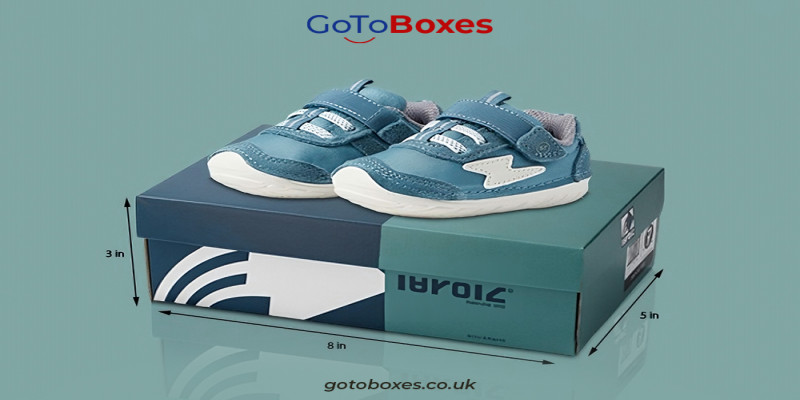
Shoe box dimensions matter more than most brands realise. The right size protects footwear, improves shelf display, reduces wasted board, and helps UK sellers avoid oversized parcel costs. This guide explains standard shoe box dimensions in cm and inches for men’s shoes, women’s shoes, kids’ shoes, trainers, boots, heels, and ecommerce shipping.
GoTo Boxes helps UK footwear brands, online sellers, and retailers choose custom shoe boxes that fit the product, print design, and delivery method. Use this guide to compare common shoe box sizes, learn how to measure a box properly, and understand when a custom size is better than a standard stock box.
Complete Guide on Shoe Box Dimensions
Shoe box dimensions help brands choose packaging that protects footwear, looks professional, and ships without wasted space. A standard adult shoe box is often around 33 cm x 19 cm x 11.5 cm, but the final size depends on the shoe type, size range, and packaging style.
Shoe box dimensions are also important for UK postage. Royal Mail lists small parcels at a maximum of 45 cm x 35 cm x 16 cm and up to 2 kg, which is why many standard shoe boxes fit well inside UK small parcel limits.
What Are Shoe Box Dimensions
Shoe box dimensions are the length, width, and height of a box. Length is the longest side, width is the shorter front-to-back side, and height is the depth from base to lid.
Packaging manufacturers usually write box dimensions as L x W x H. For example, a box listed as 35 x 22 x 12 cm means 35 cm long, 22 cm wide, and 12 cm high.
Standard Shoe Box Dimensions
Standard shoe box dimensions vary by footwear category. Men’s shoes need more length and width, while children’s shoes need smaller and lighter boxes.
| Shoe Type | Common Size in CM | Common Size in Inches |
|---|---|---|
| Men’s shoe box | 33 to 35.5 x 18 to 20 x 10 to 13 cm | 13 to 14 x 7 to 8 x 4 to 5 in |
| Women’s shoe box | 30.5 to 33 x 18 to 20 x 10 to 13 cm | 12 to 13 x 7 to 8 x 4 to 5 in |
| Children’s shoe box | 18 to 25.5 x 13 to 15 x 5 to 7.5 cm | 7 to 10 x 5 to 6 x 2 to 3 in |
| Trainer shoe box | 33 to 36 x 20 to 25 x 11 to 15 cm | 13 to 14.2 x 8 to 9.8 x 4.3 to 5.9 in |
| Boot shoe box | 36 to 45 x 25 to 35 x 12 to 25 cm | 14.2 to 17.7 x 9.8 to 13.8 x 4.7 to 9.8 in |
These are practical working ranges, not fixed rules. Published packaging guides show similar adult shoe box ranges, with men’s boxes commonly larger than women’s and children’s boxes.
Men’s Shoe Box Dimensions
Men’s shoe box dimensions are usually larger because the footwear is longer and wider. A common men’s shoe box size is around 35.5 x 20 x 12.5 cm.
Formal shoes often need a neat, close-fitting box. Trainers may need extra width because soles, padding, and heel shapes take up more room.
Women’s Shoe Box Dimensions
Women’s shoe box dimensions often sit around 30.5 x 17.5 x 10 cm for standard styles. Heels, sandals, flats, and trainers all need different space inside the box.
High heels need more careful sizing because the heel shape can press against the lid. A slightly taller box often protects the shoe better than a tight low-profile box.
Kids Shoe Box Dimensions
Kids shoe box dimensions are smaller and easier to standardise. A common children’s shoe box size is around 20 x 12.5 x 7.5 cm.
Children’s footwear brands often order several close sizes rather than one universal box. This keeps packaging tidy and avoids shoes moving around during delivery.
Shoe Box Dimensions For Shipping
Shipping shoe boxes need enough space for the product, tissue paper, inserts, and outer protection. A retail shoe box should not always be used as the only shipping box.
For UK ecommerce, many sellers try to keep footwear parcels within Royal Mail small parcel limits where possible. Royal Mail’s small parcel maximum is 45 cm long, 35 cm wide, 16 cm deep, and 2 kg in weight.
How To Measure A Shoe Box
Measure the longest side first. This is the length.
Measure the shorter base side next. This is the width.
Measure from the bottom to the top of the closed lid. This is the height.
Always confirm whether you need internal or external measurements. Internal dimensions show the usable space for shoes, while external dimensions show the full size for shipping and storage.
Internal And External Dimensions
Internal dimensions are used to check whether the shoe fits inside the box. They are important for footwear protection, tissue wrapping, and inserts.
External dimensions are used for pallet planning, shelf display, courier pricing, and warehouse storage. A box may have the right internal size but still be too large for a shipping band if the board is thick.
Best Shoe Box Size By Footwear Type
| Footwear Type | Recommended Box Style | Size Advice |
|---|---|---|
| Dress shoes | Two-piece lid and base box | Keep the fit neat and premium |
| Trainers | Strong cardboard shoe box | Allow extra width for soles |
| Heels | Taller rigid or folding box | Protect heel height and shape |
| Sandals | Slim folding carton | Avoid unnecessary empty space |
| Kids shoes | Lightweight tuck-end box | Keep board cost low |
| Boots | Deep corrugated shoe box | Allow height and ankle support |
| Luxury footwear | Rigid shoe box | Use thicker board and premium finish |
A shoe box should hold the product without crushing it. A small amount of movement is acceptable, but the footwear should not slide heavily from side to side.
Best Materials For Shoe Boxes
Cardboard is the most common material for retail shoe boxes. It is light, printable, cost-effective, and easy to stack.
Corrugated board is better for ecommerce, heavy trainers, boots, and wholesale shipping. It gives more strength during handling and transport.
Rigid board works best for luxury footwear. It feels premium and gives the box a stronger structure for gifting and display.
Custom Shoe Box Dimensions
Custom shoe box dimensions are useful when standard sizes waste space or damage the product. A custom box gives the footwear a cleaner fit and helps the brand look more professional.
Custom sizing also helps when a brand sells unusual shoe shapes. Examples include wide-fit shoes, high-top trainers, ankle boots, bridal heels, and premium leather footwear.
Why Shoe Box Size Affects Cost
Shoe box size affects board usage, print area, shipping space, and storage volume. A box that is only 2 cm too large can waste material across thousands of units.
Oversized packaging can also increase parcel costs. It may take more room in courier bags, outer cartons, and warehouse shelves.
Shoe Box Design Tips
Good shoe box design starts with the product size. Measure the largest shoe size in the range before choosing the box.
Branding should be clear but not overcrowded. A logo, colour system, product label, and simple finish usually work better than heavy artwork.
Ventilation holes can help some footwear categories. They are useful for sports shoes, leather shoes, and footwear that needs airflow before display or delivery.
Common Shoe Box Mistakes
Many brands choose one box for every shoe style. This often causes poor fit, wasted space, and weaker presentation.
Some brands forget to measure the shoes with tissue paper and inserts included. This creates a box that looks right on paper but feels tight in real use.
Another mistake is using a retail shoe box as a shipping box. A retail box is made for presentation, while a shipping box is made for impact, stacking, and courier handling.
Best Shoe Box Dimensions For UK Brands
The best shoe box dimensions depend on the footwear range, order quantity, shipping method, and branding style. A standard adult shoe box around 33 to 36 cm long works for many trainers and dress shoes, but boots and high heels often need more height.
UK brands should also think about Royal Mail, courier limits, pallet stacking, and customer unboxing. A well-sized box reduces damage, improves presentation, and keeps fulfilment easier.
When To Choose Custom Shoe Boxes
Custom shoe boxes are the better choice when your product does not fit standard sizes cleanly. They are also useful when your brand needs printed packaging, stronger board, special finishes, or ecommerce-ready strength.
GoTo Boxes can help you choose the right shoe box size, board grade, print finish, and structure. Send your footwear dimensions, quantity, and artwork requirements to request a custom quote.
Need The Right Shoe Box Size
A good shoe box should fit the footwear, protect the shape, support the brand, and work with your delivery method. Guessing the size can lead to damaged shoes, wasted board, and higher shipping costs.
Send GoTo Boxes your shoe measurements, preferred box style, order quantity, and print requirements. Our packaging team can recommend the right shoe box dimensions and prepare a custom quote for your footwear packaging.