










| Box Style | As Mention Above |
|---|---|
| Dimension (L + W + H) | All Custom Sizes & Shapes |
| MOQ | NO Minimum |
| Paper Stock | 10pt to 28pt (60lb to 400lb) Eco-Friendly Kraft, E-flute Corrugated, Bux Board, Cardstock |
| Printing | No Printing, CMYK, CMYK + 1 PMS color, CMYK + 2 PMS colors |
| Finishing | Gloss Lamination, Matte Lamination, Gloss AQ, Gloss UV, Matte UV, Spot UV, Embossing, Foiling |
| Included Options | Die Cutting, Gluing, Scored,Perforation |
| Additional Options | Eco-Friendly, Recycled Boxes, Biodegradable |
| Proof | Flat View, 3D Mock-up, Physical Sampling (On request) |
| Turnaround | 8 - 10 Business Days |
| Shipping | FLAT Position |
Give Your Aloe Skincare a Carton That Works Beyond the Shelf
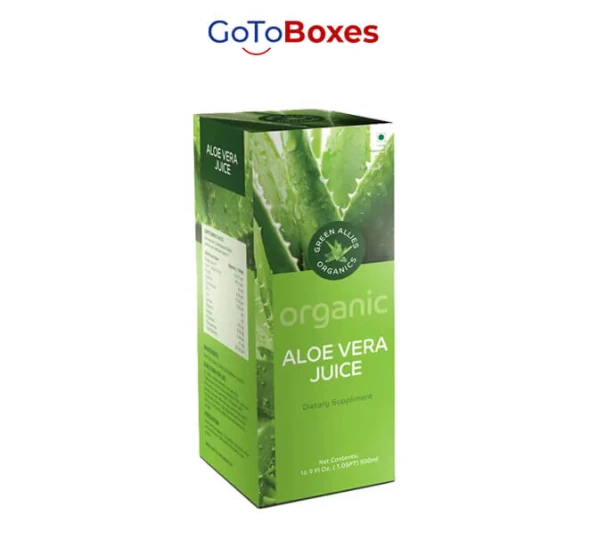
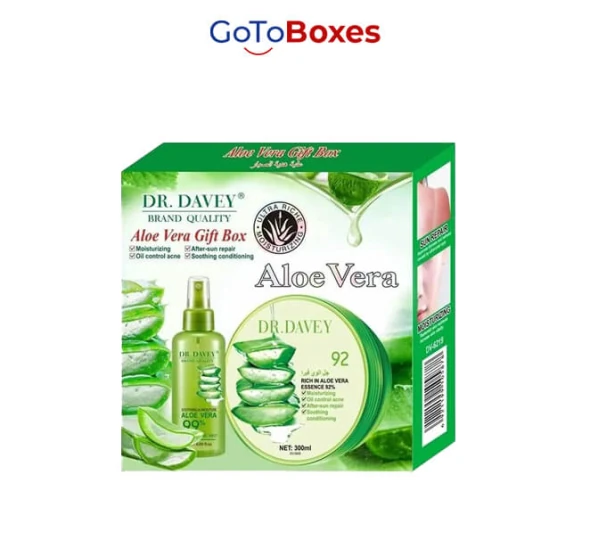
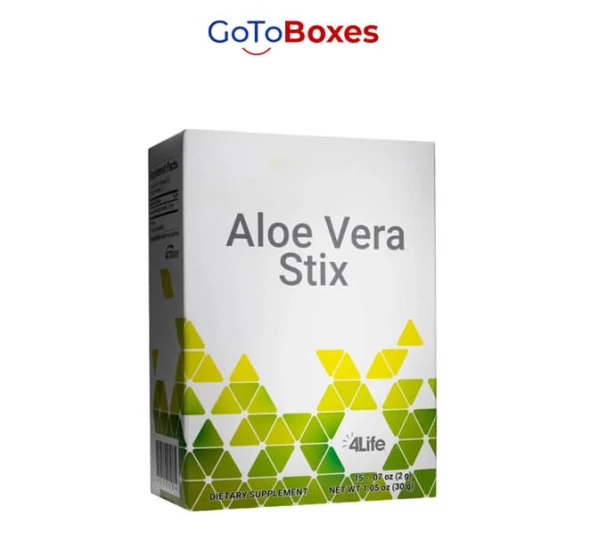
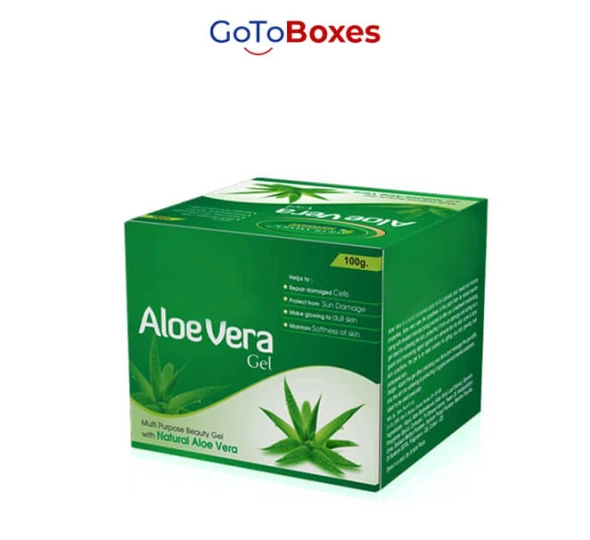
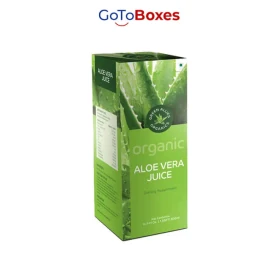
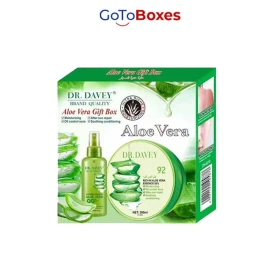
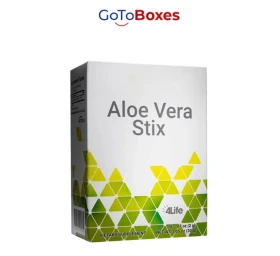
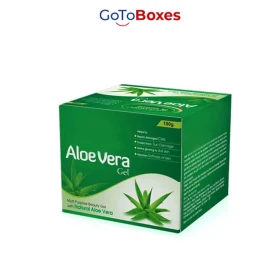
An aloe gel sold online faces different handling from a moisturiser displayed in a beauty shop. Both need clear presentation, but their packaging must also suit the container, packing process and journey to the customer. GoTo Boxes helps businesses develop Aloe Vera Boxes around these practical needs. Your packaging brief can bring together dimensions, board choice, printed information and finishing requirements, giving you a clear specification to review before ordering. These are outer cartons for products already contained in sealed tubes, bottles, jars or sachets. They provide space for branding and product information while helping protect the container from everyday surface contact. They do not hold loose gel directly or replace the container’s seal. For independent skincare makers, established cosmetic brands and contract packers, a useful carton should do three things: present the product clearly, handle predictably and fit the way the business sells.
Decide What the Box Must Do at Each Stage
Help shoppers distinguish gel, cream and lotion
A botanical illustration may suggest aloe vera, but it does not explain whether the product is a facial moisturiser, body gel or hair treatment. Make the product type easy to identify on the main display panel. Keep the size visible, too. Similar artwork across a travel tube and a full-size bottle can otherwise make online listings difficult to compare. Aloe vera packaging boxes also give curved or narrow containers extra space for readable information. This is particularly useful when a small bottle label has limited room for directions.
Keep the retail pack presentable during fulfilment
A folding carton can help reduce label rubbing and light surface marks during handling. Its protection depends on the board, fit and conditions it encounters. For ecommerce orders, assess the retail carton together with the shipping box and cushioning. A printed skincare carton should not automatically be treated as a postal pack. Glass jars, heavier bottles and multi-item orders may need additional separation and transit protection.
Support efficient packing and stock identification
The opening should allow staff to load the product without forcing flaps around a cap or catching a tube’s sealed end. Products should also come out easily when the customer opens the pack. Clear variant names on the top or end panel can help warehouse staff identify stock when cartons are stored upright or tightly grouped. This small artwork decision can make similar-looking aloe products easier to pick accurately.
Choose Board by Weight, Print Needs and Handling Conditions
Coated folding carton board for detailed retail artwork
White coated carton board is a useful starting point for gels, lotions and creams that need clear text, pale colours or detailed illustrations. Its surface supports a cleaner reproduction of fine artwork than many rough, uncoated stocks. Folding boxboard and solid bleached board are distinct material choices. Their construction, stiffness and appearance vary, so ask which grade is included in the quotation. Board weight, expressed in gsm, is only part of the specification. Thickness, stiffness, carton dimensions and closure design also influence performance. Two boards with the same gsm may behave differently when folded or loaded. For cardboard aloe vera boxes, assess a made-up sample with the filled product rather than choosing stock solely from a weight figure.
Brown kraft board for a deliberately natural appearance
Kraft board can suit an aloe range with simple typography and restrained botanical artwork. The brown surface becomes part of the design. It also affects printed colour. Pale green, yellow and other light tones may appear less bright than they do on white board. If accurate colour reproduction is central to your branding, review a suitable printed sample and discuss whether an alternative substrate is preferable. Brown board does not, by itself, establish recycled content or prove that the finished pack is environmentally preferable. Any environmental wording should reflect the actual material and complete construction.
Corrugated board for distribution and heavier combinations
Corrugated board contains a fluted layer between liners. This structure can provide useful cushioning and resistance to compression when correctly specified. It is worth considering for outer delivery packaging, larger aloe product bundles or sets containing several heavier containers. A fine-flute construction may also suit a compact presentation pack where extra structure is needed. Corrugated packaging still requires the correct dimensions and internal support. A stronger outer box will not stop loosely packed jars from striking one another.
Rigid board for gift presentation
A rigid box may suit an aloe body-care collection, treatment kit or seasonal gift set where presentation is part of the purchase. The trade-offs include higher material use, greater storage space for assembled boxes and potentially higher delivery costs. For a single everyday gel, a folding carton may be a more proportionate choice. Confirm material and structural availability for your project before settling the artwork.
Allow for the Parts of the Container That Are Easy to Miss
Measure the filled, closed product in millimetres
Product volume is not a box dimension. Two 200 ml containers can have very different heights, widths and profiles. Record the maximum dimensions of the finished item, including its cap, pump, label and any protective overcap. For a squeeze tube, measure the flattened sealed end as well as the body. For a jar, check whether the lid is wider than the base. Specify whether quoted box measurements are internal or external. Internal dimensions determine usable space, while external dimensions matter for shelf allocation and shipping arrangements.
Provide clearance without leaving excessive movement
A carton needs enough clearance for loading and normal manufacturing variation. An overly tight fit can cause bulging panels or make the product difficult to remove. Excess space creates a different problem: the container may lean, rattle or repeatedly contact the carton walls. A folded card insert or divider can help control movement where the product needs support. There is no universal clearance suitable for every container. Confirm it through a structural sample using the actual product.
Match the closure to the load
Tuck-end cartons are practical for many lightweight skincare products. Heavier jars may call for a more supportive base, such as a correctly designed crash-lock construction. Check how the base performs with the filled product, including lifting and routine handling. A closure that looks neat while empty may behave differently under load. For pump bottles, allow space around the dispenser in its shipping position. The carton should not press against the pump head or rely on the dispenser to support the top panel.
Understand the Limits of Moisture Protection
Aloe vera gel packaging boxes sit outside the primary container. The bottle, tube or jar and its closure remain responsible for containing the formula. Ordinary paperboard can soften, mark or distort when exposed to moisture. A suitable surface coating may improve resistance to light splashes or rubbing, but that does not make the entire carton waterproof. Cut edges, folds and openings remain potential entry points. Tell GoTo Boxes if products will be packed while damp, stored in humid conditions or moved between cold and warm environments where condensation may form. These details can change the material brief. If gel leaks, increasing board thickness is not the solution. Investigate the container and closure, then test the complete pack. An outer carton also does not establish shelf life, preserve ingredients or validate storage claims.
Make the Artwork Explain the Product at a Glance
Give every panel a clear purpose
Printed aloe vera boxes work best when buyers can find information without turning the pack repeatedly.
A useful starting point is:
- Front: brand, product type, size and a supported product benefit.
- Back: directions and the main explanatory copy.
- Side panels: ingredients and other required product information.
- End panel: a clear variant identifier or suitable coding area.
The final layout depends on the product and the information it must carry. Avoid shrinking essential text simply to accommodate a larger illustration. For cosmetic products sold in Great Britain, labelling obligations apply to the container and packaging, with details and exceptions depending on the information concerned. Have the final artwork checked by your Responsible Person; Northern Ireland has a separate regulatory framework.
Use colour to distinguish the range
A shared brand layout can connect an aloe cleanser, gel and moisturiser, while a different accent colour helps separate them. Combine colour with readable product names. Warehouse staff and shoppers should not have to identify a variant through a subtle shade difference alone. For custom aloe vera boxes with logo printing, supply a vector logo where possible. This keeps edges sharp when the design is resized.
Leave functional areas free from decoration
Barcodes need suitable contrast, clear surrounding space and placement away from folds or edges that distort the symbol. Test scanning on the finished pack. If batch details are added after box production, identify the coding area before choosing a coating. The surface must work with the intended ink, label or coding equipment. A QR code can link customers to additional guidance, but useful information should remain accessible on the physical pack.
Select Finishes for Their Effect on the Actual Design
CMYK printing suits artwork containing photographs, illustrations and several colours. A specified spot colour may be worth discussing when a particular brand shade matters across repeat orders. A screen proof helps check wording and layout, but it cannot accurately demonstrate board texture, gloss or every printed colour. For colour-sensitive work, ask which physical proof or print sample is appropriate and what it costs.
Finishing choices should support the way the pack is handled:
- Matt finishes create a subdued appearance, although dark areas should be checked for visible rubbing.
- Gloss finishes add shine and can make colour appear more vivid, but reflections may affect small-text readability.
- Foiling can highlight a logo or short detail; suitability depends on the stock and artwork.
- Embossing adds a raised feature, with positioning planned around folds and other structural elements.
- Spot UV introduces selective gloss where contrast will remain visible.
For custom aloe vera packaging, one carefully chosen finish may be enough. Confirm its compatibility with printing, gluing and any later coding before approval.
Plan Shapes and Sets Around How Customers Use Them
Rectangular cartons use shelf and shipping space efficiently. A slim format can suit a tube, while a wider, lower carton may accommodate a cream jar more comfortably. More unusual shapes can attract attention, but they may require extra assembly, more complex tooling or additional space during distribution. Assess those costs alongside appearance. A sleeve can work around an existing tray or grouped set, provided the products remain securely retained. An open window can reveal a container, but it also removes board and exposes part of the product to handling. Window film introduces another material into the pack. For spa retail, an aloe cleanser and moisturiser might share a divided presentation box. For a subscription service, a compact individual carton may be easier to fit alongside other beauty products. In either case, design the internal arrangement before fixing the outer dimensions.
A Practical Brief for a UK Summer Skincare Launch
Consider an illustrative UK brand launching a 150 ml aloe body gel through its website and independent coastal gift shops. The gel is filled into a broad squeeze tube with a flip-top cap. The business needs a carton that stands neatly on a shelf, identifies the product clearly and packs efficiently into ecommerce orders.
A sensible starting brief would include:
- A white folding carton for clear product text and green botanical artwork.
- Internal dimensions based on the tube’s widest sealed edge and closed cap.
- A tuck-end structure assessed with a filled sample.
- An unobstructed barcode area.
- A reserved panel for the brand’s chosen batch-coding process.
- Separate corrugated shipping protection for online orders.
The business would test loading, removal, closure performance and surface rubbing before approving production. It would also check a packed ecommerce order through its intended delivery process. This is a planning example, not a tested specification or customer case study. The final board and dimensions depend on the actual tube.
Check the Finished Pack Before Committing to Volume
Review structure and print separately
A plain structural sample can help assess size, opening and product retention. A printed proof or sample answers different questions about artwork and appearance. Establish what each approval stage covers.
During review, check:
- Clean folds without obvious surface splitting.
- Secure glue seams and correctly aligned panels.
- Closures that hold without excessive force.
- Readable text and correctly positioned artwork.
- Barcode performance on the finished surface.
- Product removal without tearing or snagging.
- Acceptable appearance after representative handling.
A digital mock-up cannot demonstrate these physical qualities.
Compare the complete cost of supply
When comparing wholesale aloe vera boxes, include tooling, printing, finishes, inserts, packing labour, delivery and storage. A lower unit price may not be the lowest overall cost if the carton takes longer to assemble or occupies unnecessary space. Ask for quantities split by artwork version. Several designs using one structure may still involve separate print setup or production requirements. Balance larger orders against realistic demand and planned formula or artwork changes. Unused cartons become a cost when product information changes.
Send GoTo Boxes a Brief That Can Be Quoted Accurately
For custom aloe vera boxes UK businesses can assess with confidence, start with the finished product and intended sales channel. Send GoTo Boxes your container measurements, filled weight, quantity per design, preferred style and artwork status. Include any insert requirements, delivery postcode and target arrival date. A product photograph helps explain the shape; a physical item allows a more useful fit assessment. Ask the quotation to identify the proposed board, internal dimensions, printing, finishing, sample arrangements and delivery assumptions. This gives your business a clear basis for approval and future repeat orders.
Request a quotation with your product details to start planning the right carton for your aloe skincare range.